To dye, or not to dye. That is the decision many people, particularly women, face when their hair starts to grey.
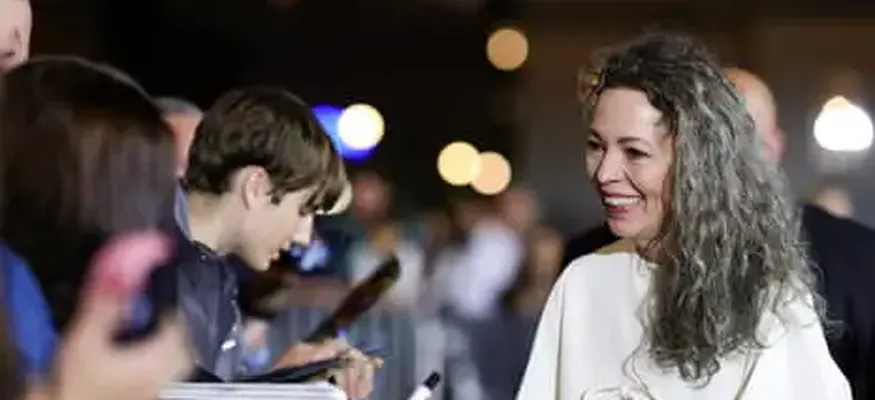
This week Olivia Colman joined the growing ranks of women embracing grey hair and ditching the dye. Appearing at Zurich film festival, Colman had swapped her dark signature pixie cut for a grey, curly mane swept to one side.
Online, Colman was swiftly lauded for her new look, with Vogue describing her as a “silver hair muse”.
The 52-year-old joins fellow actors including Andie MacDowell and Lisa Bonet who have embraced the salt-and-pepper or all-out silver look.
However, for women outside Hollywood, escaping the tyranny of the hair dye bottle is not always so easy.
“Being able to embrace your grey hair proudly is a privilege,” says Stacey Duguid. In June, Duguid, a former fashion editor, began documenting her struggles to find a job aged 52 despite her decades of experience. She told her followers that she had downsized her house and was now on universal credit. She received thousands of messages from fellow middle-aged women also struggling to find employment.
“There is a reluctance for women who are trying to get back into the workplace to go grey,” Duguid says. “To do it, you are most likely already in a senior position in the workplace. As an unemployed, broke, single parent it wasn’t an option for me.”
Grey hairs start to emerge, on average, in the mid-30s for white and Asian people and around the mid-40s for Black people.
Louise Chunn, a former editor turned founder of the therapist-finding platform Welldoing, first stopped dying her hair when she became the editor of InStyle magazine in the UK.
She says: “I didn’t fear how bosses would view my grey hair, because the editor’s job offer came from New York. It was more important that you were well groomed, somewhat sophisticated.”
Chunn began dying her hair again in her 50s because she worried it made her look older, but stopped in her 60s.
Colman’s new look was created with extensions by the London based hair specialist Inanch Emir. Using four shades of grey, Emir mirrored Colman’s natural colour while adding volume and length.
Duguid describes Colman’s hair as “spectacular” but has all the trademarks of a much younger woman. “It’s a sort of fetishised version of grey hair,” she adds.
Sarah Bower, a grey-blending and colour specialist at Larry King salon in London, says clients considering embracing their grey hair are most concerned about looking older.
Bower says going grey isn’t as simple as calling it a day on hair dye. Much of her work involves blending the demarcation line – the visible difference between someone’s natural colour and dyed hair – to “try and make it look like they’ve already got their natural hair colour”. She says it can take up to three years to fully grow out grey hair.
According to the Office for National Statistics about 3% of people between the ages of 50 and 64 are unemployed in the UK. Despite the state pension age rising to 67, a recent study by the Centre for Ageing Better found that a job applicant is perceived to become undesirable to recruiters on average at the age of 55.
Research by Ian Burn, an economics professor at the University of Liverpool, found that age discrimination in recruitment against women in the UK starts at least 10 years earlier than it does against men. Once a woman hits 40, her chances of being called for interview begin to decline. For men, the decline does not start until their 50s.
Recent catwalks have been more age inclusive. In January, Stephanie Cavalli, a 50-year-old model, whose hair is peppered with greys, opened the Chanel couture show. Fifty-nine-year-old Evelyn Effrim-Botchey, who stopped modelling in her late 20s after work began to dry up, has spoken about how her grey-streaked hair has fuelled her comeback.
But most older models continue to have dyed hair. Not one of Gucci’s glamorous sciura cast at its recent Milan show was grey, while 70-year-old Jerry Hall, still blonde, fronts this month’s Grazia. Pamela Anderson, 59, has embraced going makeup-free since 2023 butremains blonde.
Duguid has heard from older women who use filters during video interviews and calls to help mask their age. “It’s completely exhausting” she says. “Grey hair is different though because you can’t really hide it. If you are trying to find a job, you will go out and get a box dye.”
Alyson Walsh, a former magazine editor who now runs the style platform That’s Not My Age, says: “Despite the fact that older women have lots of experience and knowledge, there’s still the stereotype that you’re not allowed to look old,” she says. Walsh stopped dying her hair in 2015. “I feel empowered,” she says. “It saves me money. There is less maintenance and it’s in better condition. I don’t look older. I just look my age.”
‘No One I Work With Seems To Care’: How I Let Myself Go Grey
Back in the distant days of Covid lockdowns, I obsessed over the 3in-wide streak of visible grey in my hair. I’d long stopped using box colours and hair salons were shut. Was it time to let naturetake over from chemicals?
Working from home and in social isolation, going grey was liberating. My at-home defiance of societal expectations for a middle-aged woman even felt rebellious.
The prospect of a new job and new colleagues dented that defianceShould I abandon my mini revolution and surrender to the salon – fork out for a beautiful toffee brown with caramel lowlights?
If I’d known Olivia Colman and other high-profile women were going to publicly raise a metaphorical finger to the expected norms of ageing, I might have held back on the hair therapy.
But I battled the toffee cravings and took up a new professional role.
My team members are younger than me, and years of messaging that grey equals old, and signals an end of self-care, is difficult to escape.
But I stayed the course. I learned that my all-natural hair, while an integral part of who I am, is only a small part of how others see me. In short, no one I work with seems to care.
There is no doubt, a sexist-laden ageism exists. Stereotypical assumptions persist about how older women should age. Why else would we be talking about Olivia Colman’s “daring” grey hair?
But my grey hair – along with the lines on my face – tells my story. Both are, I have decided, life affirming. Donna Carton