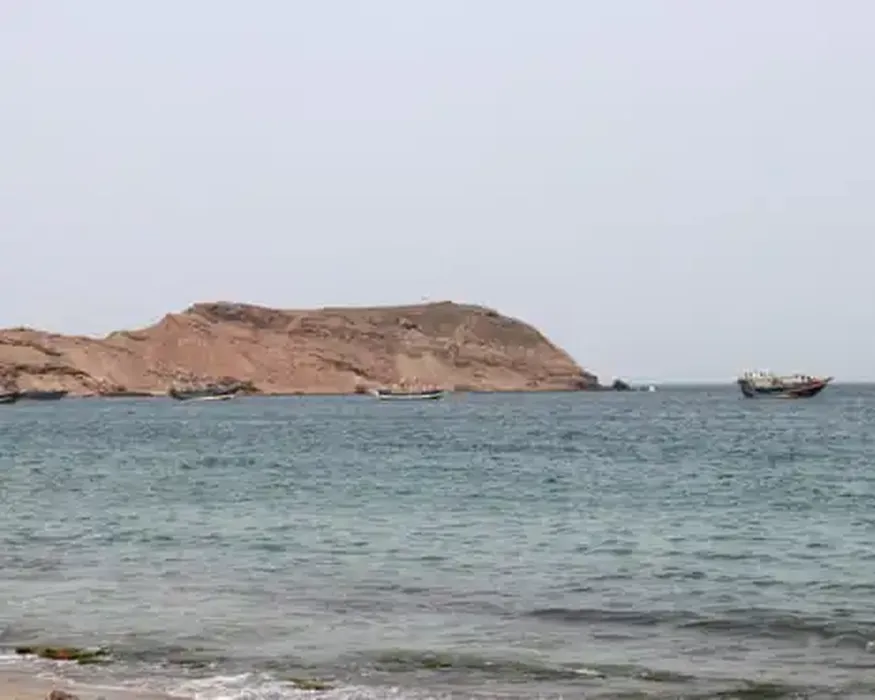
Yemen’s rampant Houthi forces have captured a strategic island in the Bab al-Mandab strait, expanding their control of the narrow waterway, one of the world’s vital shipping routes.
The Iran-aligned Houthis took control of the volcanic island after forces allied to the UN-backed, Aden-based government left in the latest of a dramatic series of reverses along Yemen’s west coast in recent days, including the loss of the port city of Mocha on Thursday.
Saudi Arabia, which supports and bankrolls the official Yemen government, mounted air raids on Houthi positions in Mocha on Friday.
The Bab al-Mandab links Asia to Europe via the Red Sea and Suez canal. Perim island, also known as Mayun, divides the waterway in two, close to its narrowest point. The United Arab Emirates, a former Saudi ally in the anti-Houthi coalition, had been building an airbase on the island before ending its active involvement in the conflict in January.
Saudi Arabia has increasingly relied on the Red Sea and Bab al-Mandab to export its crude since Iran has been targeting vessels in the strait of Hormuz. About 12% of the world’s goods are typically shipped through the strait.
Full Houthi control of shipping in the strait, alongside Iranian control of the strait of Hormuz, would strengthen the chokeholds of anti-western forces over global energy shipments. Oil prices have risen to more than $100 a barrel as the fighting in Yemen has escalated.
Iran hailed the Houthi advances in an official statement on Friday, its first extended comment on the renewed fighting inside Yemen. Iran and the Houthis have been allied ever since the Houthis rose to power inside Yemen in 2014.
British diplomatic sources said they did not at present expect Donald Trump to sanction any US bombing of Houthi positions in Yemen, despite requests to do so from Saudi Arabia. The pace of the Houthi advance, and political divisions in the Yemen governorates not controlled by the Houthis, have left western capitals fearful that even the Yemen government capital, Aden, could fall to the Houthis. The UK effectively treated Yemen as a British protectorate until 1967.
The surge in fighting in the past week has sent over 46,000 people fleeing, and “overnight, large numbers of people were reportedly seen leaving Mocha with their belongings”, the UN migration agency said on Friday.
The Houthi progress down the Red Sea coast from the port of Hodeidah also strengthens Iran’s hand in trying to reach an agreement with other Gulf states on future control of the strait of Hormuz, the central dispute between the US and Iran. Iran has reached an agreement on temporary approved routes with Oman, the country sharing the southern coast of the Hormuz strait. The proposed deal is supposed to be discussed at a meeting of Gulf Cooperation Council (GCC) foreign ministers in the Omani coastal city of Salalah on Monday.
The deal, including a temporary approved route for shipping largely under Iranian control, would – if agreed by the GCC – put pressure on the US to lift its highly effective blockade of Iranian oil ports, a blockade that is severely damaging the Iranian economy.
The US struck a surprise ceasefire deal with the Houthis in May 2025 after the cost of a bombing campaign escalated, and Houthis gave private assurances that they would not attack US shipping in the Red Sea. The Houthi leadership this week continued to give similar assurances to all shipping except Saudi Arabian oil tankers.
On 14 August Saudi Arabia assembled a 14-country international maritime naval coalition to protect freedom of navigation in the Bab al-Mandab strait and the Gulf of Aden. The coalition, including Bahrain, Pakistan, Somalia, Djibouti, Turkey and Egypt, has so far been invisible, though Riyadh would argue that such a coalition of the willing takes time to assemble.
Recriminations are under way over the fall of Mocha, with the role of Maj Gen Tareq Saleh, leader of the National Resistance forces that retreated from the city, under scrutiny. He said the retreat was necessary to regroup his forces.
On her Facebook page, the Yemeni 2011 Nobel prize winner Tawakkol Karman called on Yemen’s president, Rashad al-Alimi, to dismiss Saleh and to refer him for investigation and trial of charges of conspiracy and high treason.
Saudi Arabia is now facing a familiar dilemma: whether to reach a negotiated settlement with the Houthis on the future of Yemen or to try to push the highly stretched Houthi forces back.
Although the Houthis operate independently of Tehran’s instructions, it is hugely to Iran’s advantage for them to be fighting Saudi Arabia as the Saudis are more likely in turn to put pressure on Washington to relent over Iran.
There is also concern in western capitals about the use of western weaponry by the Saudis in Yemen, and whether their activity complies with international humanitarian law, including whether the Saudi strikes can truly be seen as acts of self-defence.