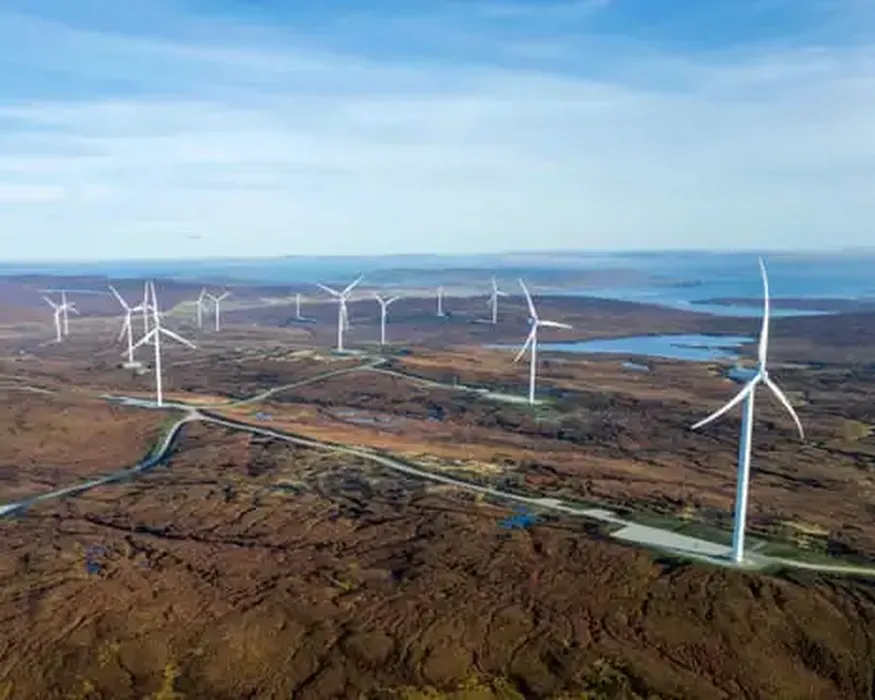
A rapid global shift to clean electricity could trigger a “cascade” of progress towards repairing the damage to the planet by the climate crisis, according to a report identifying the environmental solutions most likely to bring about change.
The analysis focuses on “positive tipping points” – thresholds beyond which a sustainable technology or practice becomes increasingly cheap, widespread or politically popular, allowing progress to become self-propelling.
It identifies clean electricity as the “highest-leverage” transition, because cheaper solar and wind power can accelerate change far beyond the energy sector. Clean power improves the economics of electric vehicles, heat pumps and cleaner industrial processes, while reducing air pollution and stimulating further demand for renewable electricity.
The report builds on the work of Prof Tim Lenton, the founding director of the University of Exeter’s Global Systems Institute, who has studied climate tipping points since the 1990s.
Steve Smith, the report’s author and a research fellow at the University of Exeter, said: “The cascade of clean energy that we’re seeing now is just doing so much more than anybody expected even 10 years ago.”
Solar and wind power have already crossed positive tipping points in many major markets, Smith said, as growing deployment has reduced costs, attracted investment and driven further expansion.
The report, produced by the University of Exeter with the Earthshot prize, applies tipping point science to 51 priority areas across five environmental goals: protecting nature, cleaning the air, reviving oceans, eliminating waste and tackling the climate crisis.
Smith said positive tipping points could be understood as the beneficial counterpart to dangerous climate thresholds, such as the collapse of ice sheets or the death of coral reefs.
“Tipping points can also work in our favour,” he said. The rapid growth of solar power, wind power and electric vehicles, as well as the recovery of some natural systems, showed beneficial change could accelerate after reaching a critical threshold.
However, the transition to clean power is being impeded by slow planning and grid expansion, particularly in wealthier economies, and a severe lack of investment elsewhere. Africa receives less than 2% of global clean energy investment despite possessing 60% of the world’s best solar resources, according to the report.
Research cited in the analysis suggests coordinated policies supporting clean power, transport and heating could bring forward tipping points in those sectors by between two and eight years. Progress in one sector makes the others easier by increasing demand for clean electricity, encouraging investment and driving costs down further.
Transforming global commodity supply chains is identified as another high-impact intervention. A relatively small number of companies, banks and regulators control trade in commodities including beef, soy, palm oil, timber, cocoa and coffee, which together drive much of the world’s tropical deforestation.
Aligning the policies of large markets such as the EU, China, UK and US could make deforestation-free products the global norm, the report said. If regulators, producers and financial institutions adopted common standards, companies could find it increasingly difficult to sell or finance goods linked to forest destruction.
“You need to be able to align not just the producers, but also the policymakers, the wholesalers, the consumers, the banks, the insurance companies, and get everybody working and doing the same thing,” Smith said.
Clean cooking and household energy are also close to tipping points in some countries, as pay-as-you-go business models and decentralised solar power make cleaner technologies more affordable and accessible. About 2.1 billion people still rely on solid fuels for cooking, exposing them to harmful indoor air pollution, with women and children suffering disproportionately.
Smith also singled out cutting methane emissions as one of the quickest ways to alter the course of global heating. Methane is responsible for about 30% of the warming experienced so far but remains in the atmosphere for only about 12 years.
“Methane abatement is one of the fastest levers we have available for limiting peak warming,” he said. Satellites and drones can now expose methane leaks that were previously invisible, allowing relatively inexpensive interventions to affect the temperature trajectory within a decade.
The report argues that climate adaptation could also become self-reinforcing. When flood defences, early-warning systems and resilient infrastructure are shown to reduce losses, they can lower insurance and borrowing costs, attract investors and make further investment more attractive.
But finance is frequently working in the opposite direction. About $7.3tn (£5.4tn) flows each year to activities that degrade nature, compared with about $220bn for nature-based solutions, according to UN figures cited in the report.
“For every £1 invested in protecting nature, you’ve got £30 spent trying to degrade it,” Smith said. “So that’s a political choice and it’s not a lack of finance. It’s where it’s used.”